
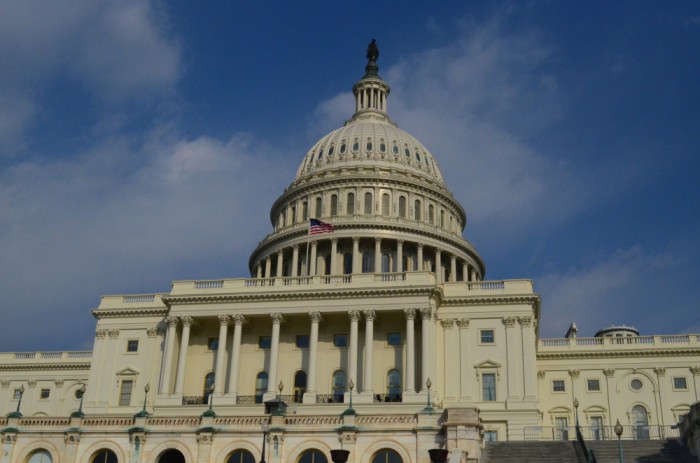
The Senate took a significant step on Tuesday by advancing a war powers resolution that seeks to compel former President Donald Trump to halt the ongoing conflict in Iran unless he secures congressional approval to proceed. This 50-47 vote marks the first successful movement of the bill in the chamber after eight attempts since the clash erupted in February. Four Republican senators sided with nearly all Democrats, with the exception of one, to push the bill forward.
Among those Republicans was Senator Bill Cassidy of Louisiana, who recently experienced a primary election defeat where Trump supported his rival. Cassidy expressed his stance on social media following the vote, stating, “While I support the administration’s efforts to dismantle Iran’s nuclear program, the White House and Pentagon have left Congress in the dark on Operation Epic Fury. In Louisiana, I’ve heard from people, including President Trump’s supporters, who are concerned about this war. Until the administration provides clarity, no congressional authorization or extension can be justified.”
Joining Cassidy in advancing the bill were Senators Lisa Murkowski of Alaska, Rand Paul of Kentucky, and Susan Collins of Maine, who had previously voted in favor of the measure. Meanwhile, Senator John Fetterman of Pennsylvania stood as the only Democrat opposing the resolution, with three Republican senators abstaining from the vote.
Senate Minority Leader Chuck Schumer commented on the breakthrough, emphasizing the growing pressure on Republicans. “Vote by vote, Democrats are breaking through Republicans’ wall of silence on Trump’s illegal war,” Schumer stated. “For more than 80 days, Trump has dragged America into a costly, chaotic conflict with no plan, no objective, and no legal authority. Today proved our pressure is working: Republicans are starting to crack, and momentum is building to check him. We are not letting up.”
The resolution’s advancement is seen by Democrats as a strategic move to urge Republicans to clarify their position on the conflict, despite the likelihood of a presidential veto even if it passes both chambers of Congress. Virginia Senator Tim Kaine, who sponsored the bill, urged the Senate to reflect on the rationale and implications of the war. “The Senate should use this moment to do what we should have done before the war started – discuss the rationale, strategy, end state, and costs to American taxpayers and our economy,” Kaine stated prior to the vote.