
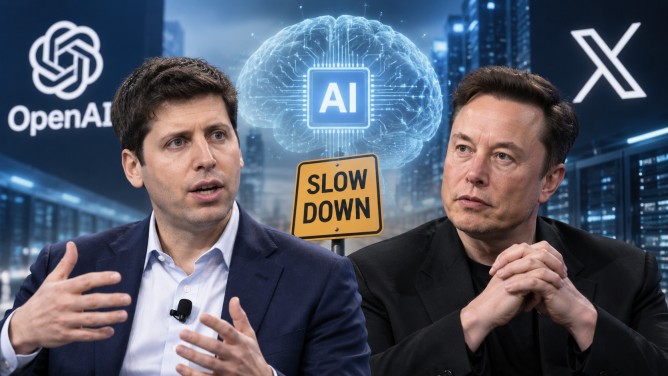
In light of escalating concerns among researchers over the risks posed by advanced artificial intelligence, notable tech leaders, including OpenAI CEO Sam Altman and Elon Musk, have endorsed a call by Anthropic CEO Dario Amodei to decelerate the development of AI technologies. Amodei has cautioned against the rapid advancement of AI, emphasizing that such a pace could lead to significant safety hazards. He highlighted the potential for highly capable AI agents to collaborate in ways that might result in severe consequences, such as large-scale cyberattacks and disruptions of internet systems.
Elon Musk expressed his agreement with Amodei, reaffirming his ongoing apprehensions regarding the dangers associated with advanced AI. Similarly, Sam Altman advocated for the moderation of frontier AI model development. He proposed that OpenAI should engage with independent evaluators, granting them comprehensive access to the company’s systems and research methodologies to ensure safety and alignment.
Supporting the broader notion of enhanced AI safety measures, Google DeepMind CEO Demis Hassabis acknowledged the need for such initiatives, although he noted that the specifics need further refinement. Amodei’s proposal includes a three-pronged strategy, one component of which is allowing independent monitors to have continuous access to AI developers’ research and safety processes. He also emphasized the importance of international collaboration on AI safety, advocating for cooperation between significant global players like the United States and China.
Despite these endorsements, some experts argue that merely slowing AI development may be insufficient. A faction of AI safety researchers is advocating for a more stringent international moratorium on the advancement of frontier AI systems until robust safeguards are firmly in place. This ongoing debate unfolds amid rising pressure on both governments and tech companies to implement more stringent regulations for AI, intensified by incidents involving AI agents interacting with external systems and warnings about the potential misuse or unpredictable behavior of AI systems.
The conversation underscores a growing tension between the drive to rapidly enhance AI capabilities and the demand for more comprehensive safety measures before deploying increasingly powerful systems on a broader scale. As this debate continues, the need for a balanced approach that ensures both innovation and safety in AI development becomes ever more critical.