
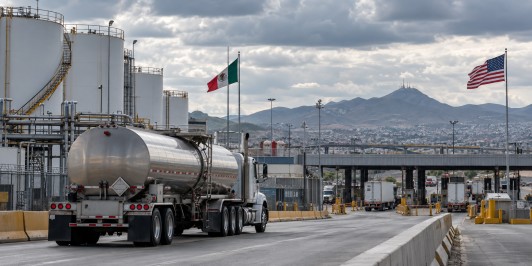
Mexico could face significant economic challenges if the United States imposes restrictions on diesel exports, a move backed by U.S. President Donald Trump. Such restrictions may force Mexico to seek alternative, more distant sources for diesel, driving up transportation costs and impacting diesel prices, inflation, and key sectors such as transportation and agriculture.
The U.S. supplies over 40% of Mexico’s diesel needs, with imports averaging 288,000 barrels per day as of June 2026, according to energy data. This dependency underscores the potential impact of any U.S. export limitations, especially as global energy prices rise due to geopolitical tensions in the Middle East and Ukraine.
In response to these developments, Mexican President Claudia Sheinbaum has assured that domestic diesel production remains sufficient, pointing to the country’s refinery network, including the Dos Bocas refinery in Tabasco, as a critical resource. The Mexican government has also maintained fuel subsidies and established a price agreement with retailers to stabilize diesel costs through tax measures and additional support.
Energy experts in Mexico are urging a strategic pivot, recommending that the country diversify its diesel import sources, boost domestic refining capacities, and enhance fuel storage infrastructure. These measures are seen as crucial to mitigating the risks associated with potential disruptions in U.S. diesel imports.
As Mexico navigates these uncertainties, the broader implications of U.S. energy policy continue to reverberate across the region. The country’s efforts to lessen its dependency on U.S. diesel imports reflect a broader strategy to shield its economy from volatile international energy markets.