
The U.S. Federal Communications Commission (FCC) has given the green light to SpaceX’s ambitious Starmind project, which plans to launch up to one million satellites to function as orbital data centers. This move marks a significant step towards establishing space-based computing infrastructure designed to meet the increasing demands of artificial intelligence (AI) computing.
According to the FCC, the initiative could play a crucial role in bolstering America’s AI industry by providing a new avenue for data processing in space. SpaceX aims to utilize solar energy to power these orbital systems, potentially alleviating the strain on traditional data centers that rely heavily on terrestrial electricity, water resources, and land.
Under the terms of the FCC’s approval, SpaceX is tasked with deploying the first batch of satellites by November 2033, with a requirement to have at least 100,000 satellites in orbit by November 2035. By November 2038, SpaceX must have launched 50% of the approved satellite constellation.
Despite the approval, the Starmind project faces several technical and economic hurdles. Challenges include managing the excess heat produced by computing equipment in space, the high costs associated with satellite deployment, and the increasing risk of satellite collisions due to congestion in Earth’s orbit.
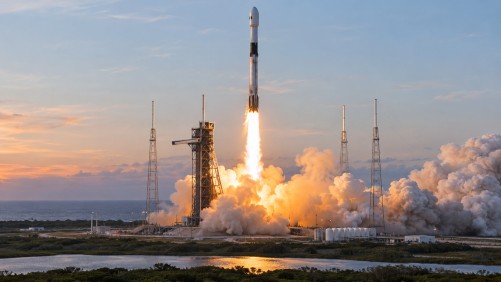
SpaceX’s success with this project is expected to hinge on the development and deployment of its next-generation Starship rocket, which is anticipated to reduce launch costs and facilitate the large-scale deployment of satellites.
The FCC’s approval potentially paves the way for a new era in space-based data processing. However, the project’s realization will depend on advancements in technology, the efficacy of launch vehicles, and the economic viability of maintaining orbital data centers.