
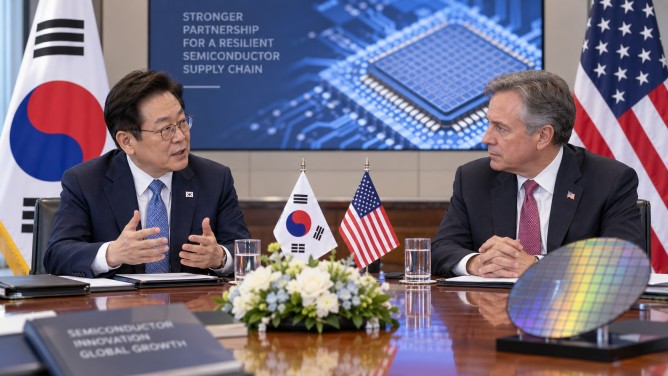
In a move to boost semiconductor manufacturing in the United States, South Korea and the U.S. are currently engaged in discussions about potential investments in the American semiconductor sector. These talks are part of a wider set of bilateral negotiations, as revealed by an official from the South Korean presidency. This initiative coincides with Washington’s consideration of imposing new tariffs on semiconductor imports, suggesting that companies might face increased costs unless they expand their production capabilities on U.S. soil.
Last year, South Korea committed to a substantial $350 billion investment in U.S. manufacturing under an existing agreement. As part of this deal, it was stipulated that South Korean chipmakers should benefit from tariff rates that are no less favorable than those provided to other leading semiconductor trading partners. This aspect is particularly significant for South Korea, which is home to global memory-chip leaders Samsung Electronics and SK Hynix. These companies have seen a surge in demand due to the growing investments by technology firms in artificial intelligence infrastructure.
The discussions between the two nations are crucial, as they not only focus on economic investments but also touch upon national security concerns. Progress in separate talks concerning defense-related issues has been limited, the South Korean official noted, especially with regards to Seoul’s aspirations to develop a nuclear-powered submarine. These discussions highlight the multifaceted nature of U.S.-South Korea relations, where economic, technological, and security interests intersect.
As the global semiconductor landscape evolves, the outcome of these negotiations could have significant implications for both nations. For the U.S., ensuring a robust domestic semiconductor industry is a strategic priority, especially amid global supply chain challenges. Meanwhile, South Korea’s commitment to investing heavily in the U.S. underscores its strategic interest in maintaining a stable and favorable trade relationship with one of its key partners.