
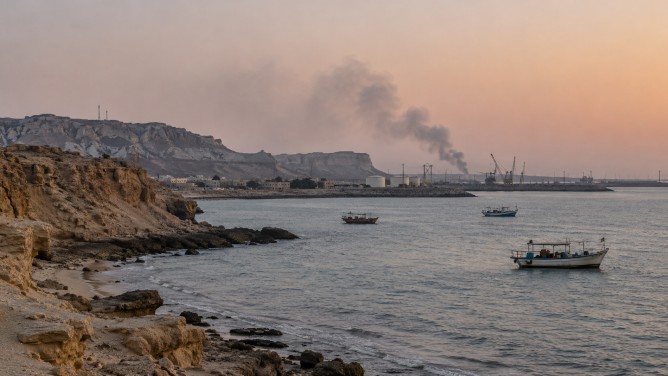
The United States has conducted limited military strikes on Iran’s Qeshm Island, intensifying regional tensions even as diplomatic efforts hint at a possible resolution to ongoing conflicts. The strikes, confirmed by US Central Command, targeted Iranian surface-to-air missile systems allegedly used in attacks against American aircraft and military assets.
US officials described the operation as defensive and emphasized its limited scope, asserting it does not signify the start of a broader military campaign against Iran. Despite these reassurances, the incident underscores the precarious security situation surrounding the strategic Strait of Hormuz.
The military action occurred shortly after US Vice President JD Vance expressed optimism about diplomatic negotiations aimed at resolving the conflict, contingent on Iran agreeing to significant commitments regarding its nuclear program. However, the path to diplomacy remains fraught with complications, including disagreements over economic sanctions, frozen Iranian assets, oil exports, and nuclear restrictions.
In response to the strikes, Iranian Deputy Foreign Minister Kazem Gharibabadi condemned the actions, reaffirming Tehran’s stance of being in a state of war and reserving the right to defend its territory. Iranian parliamentary leaders further cautioned that continued American aggression could provoke unpredictable responses that might extend beyond the Middle East.
Qatar is playing a key role in facilitating diplomatic communication between Washington and Tehran, with regional governments urging both nations to avoid further military escalation. Gulf countries are particularly apprehensive about the potential consequences of renewed conflict on regional security, energy supplies, and maritime trade.
US President Donald Trump has expressed confidence in reaching a diplomatic agreement, though he warned of potential further action against suspected Iranian nuclear facilities if negotiations fail. The situation presents two potential outcomes: a renewed diplomatic engagement or an escalation in military confrontation, with the future of the Strait of Hormuz and international energy supplies hanging in the balance.