
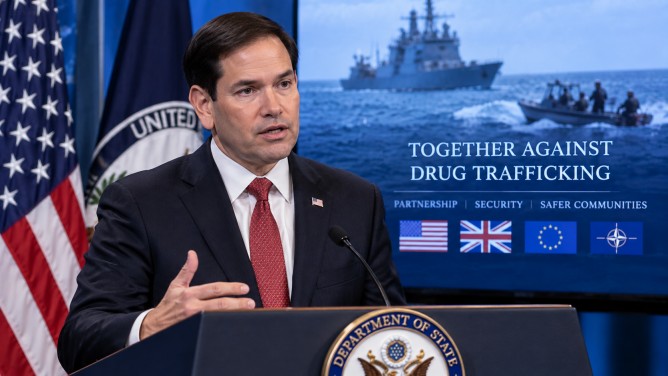
During a visit to Ecuador, U.S. Secretary of State Marco Rubio announced plans for the United States to collaborate more extensively with Latin American countries in the fight against drug trafficking. Rubio underscored the importance of forming agreements with nations such as Ecuador and Colombia to conduct joint operations, particularly in territorial waters, while adhering to local laws. This initiative is part of Washington’s broader strategy to address drug-related issues in the region.
Rubio’s statements coincide with an ongoing U.S. military campaign targeting vessels suspected of drug trafficking. The campaign, which began in September 2025, has reportedly resulted in 69 operations, with the latest strike in the Caribbean Sea leading to three fatalities. The total number of deaths from these U.S. boat strikes has reached at least 230. Rubio noted that any future military actions would be evaluated on a case-by-case basis, taking into account the specific threat and the vessel’s location.
The initiative to enhance regional collaboration marks a shift in strategy following criticism of previous unilateral U.S. strikes. These actions, carried out under the Trump administration, targeted vessels with occupants accused of being involved with “narco-terrorists.” Rubio emphasized that working alongside regional governments is crucial for effectively disrupting drug-trafficking routes and ultimately ending them.
By fostering partnerships with countries in Latin America, the United States aims to enhance its efforts to combat the drug trade while respecting the sovereignty and legal frameworks of its allies. Rubio’s visit to Ecuador highlights the significance of diplomatic engagements in addressing transnational challenges such as drug trafficking.