
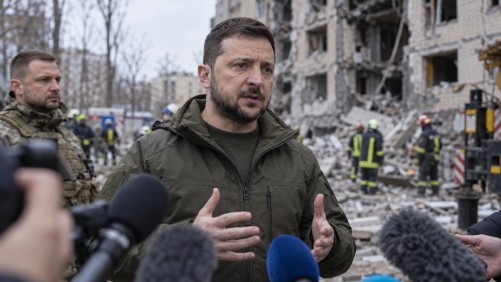
Ukrainian President Volodymyr Zelensky expressed concerns over the absence of advance warnings from the United States and other allies prior to a Russian ballistic missile attack that took place on Sunday night. According to Zelensky, this marked the third recent incident where Ukraine did not receive its customary early alerts for such threats, raising alarms about the reliability of intelligence sharing.
The Ukrainian leader highlighted that the lack of timely intelligence could have severe implications for the country’s defense strategy. Despite these concerns, former US President Donald Trump dismissed claims that intelligence sharing had ceased, affirming that the United States continued to provide Ukraine with necessary intelligence.
Ukrainian officials suspect that there may have been intermittent restrictions on intelligence sharing by the US, which potentially allowed an initial wave of Russian missile strikes to occur without warning. However, they noted that early-warning support resumed in time for a second wave of attacks later that day. A US Defense Department official, however, stated that there had been no change in the Pentagon’s policy regarding intelligence sharing with Ukraine.
This situation unfolds amid escalating tensions between Zelensky and Trump over the ongoing war and diplomatic efforts to resolve the conflict. There is a backdrop of historical context to these tensions; in March 2025, the United States temporarily halted intelligence sharing with Ukraine following a difficult meeting between Zelensky, Trump, and US Vice President JD Vance. This suspension was subsequently lifted.
The current dispute underscores the complexities of international intelligence collaborations and the strategic importance of timely information in conflict zones. As both nations navigate these diplomatic challenges, the need for clear communication and reliable intelligence sharing remains critical in ensuring Ukraine’s defense capabilities are not compromised.