
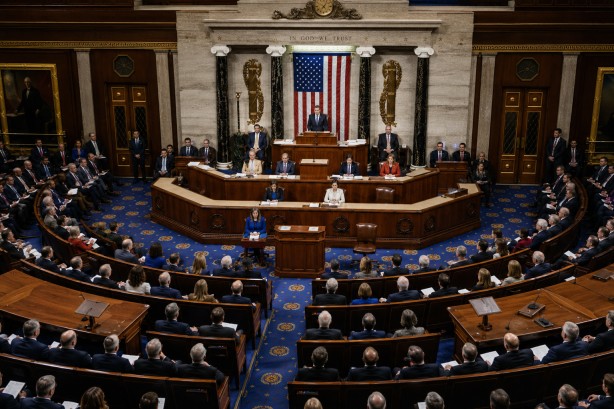
The U.S. House of Representatives has approved a significant $1.15 trillion National Defense Authorization Act (NDAA), marking a major step forward in defense spending despite deep political divides. The legislation, which passed in a closely contested 216-212 vote, now awaits deliberation in the Senate. Central to the bill are provisions for 5% to 7% pay raises for military personnel and substantial investments aimed at bolstering the capabilities of the U.S. armed forces.
Republican leaders have emphasized the necessity of the bill to modernize military resources and enhance national defense. However, the vote revealed stark partisan lines, with most Democrats opposing the measure. They criticized the allocation of funds, arguing that it prioritizes defense spending excessively while domestic programs face cuts. This financial decision comes amidst broader political tensions, particularly regarding President Donald Trump’s recent military actions in Iran, which were conducted without congressional approval, raising concerns about escalating U.S. military involvement in the Middle East.
The bill also stirs controversy due to provisions related to voting laws, championed by the Trump administration. These include stricter voter ID requirements and restrictions on mail-in voting, which Democrats argue are misplaced within a defense bill. The inclusion of these contentious voting provisions has further fueled the debate surrounding the legislation.
In the course of its passage, the House rejected an amendment that sought to terminate U.S. military aid to Ukraine. Additionally, several amendments, particularly those addressing transgender military policies and defense healthcare, sparked vigorous debate among lawmakers. These discussions underscore the complex and multifaceted issues intertwined with national defense funding.
Concurrently, House Republicans have moved forward with a budget framework that allocates $73 billion specifically for military operations involving Iran. This figure, however, falls significantly short of the Pentagon’s broader defense funding proposal, highlighting ongoing disagreements over the scope and scale of U.S. military expenditures.